Someone in Jukistopia once said that if history teaches us anything, it is that we learn nothing from history. I have issued jeremiads to anyone willing to listen about the coming August 2013 General elections. I have said they may well be the worst since the 1988 mlolongo elections. What shocks me is this: two out of three people ask, what was wrong with the 1988 elections?
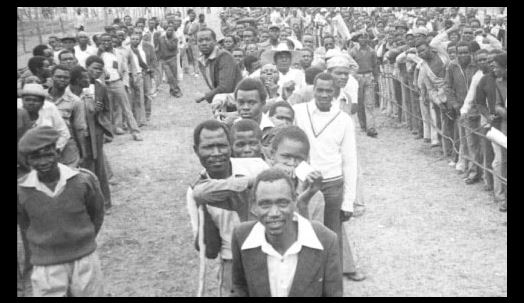
When I tell them we voted by queuing behind an agent holding a candidate’s picture, they pause.
“What!?”
Yes. That happened.
KANU – Baba na Mama
In 1988, Kenya was a one-party state. Kenya African National Union—KANU—was both baba and mama. The party was the government, and the government was the party. That is why that year’s elections drew heat for what became famously known as mlolongo voting. Since there was only one party, whoever was nominated by KANU became the MP.
The “most transparent” system, according to the wise men of KANU, was this: at every polling station, voters would queue behind the agent of their preferred candidate.
Transparent indeed. Painfully so.
But that wasn’t even the worst part.
The truly abhorrent detail was this: anyone who secured 70% of the vote in this queue system would be declared unopposed. Their name would go straight through.
Only, the lists that eventually reached Nairobi bore little resemblance to what had been seen on the dusty school fields.
Mchujo—the “filtering”—it was called.
A perfect mechanism for chujaring those without the right KANU damu.
Did we learn from the mistakes
The lesson—learned or not learned, depending on where you stand—was simple: if you want to win easily, suppress turnout. Disorganise the process. Confuse the voter.
For those curious, look up Okiki Amayo, Joseph Kamotho, and Peter Oloo Aringo—names tied to party discipline and the machinery of that era.
On a lighter note, because mlolongo and mchujo were thrown around almost interchangeably, I grew up thinking they meant the same thing. For the longest time, I called a queue a mchunjo.
Panga mchunjo.